ATEX Compliance You Can Defend, First Time and Every Time

ISO 17025 Accredited Combustible Dust Lab
500+ DSEAR/ATEX Assessements
10+ Years in Business
An ATEX assessment that falls short under scrutiny doesn’t just create a regulatory problem. It creates a personal one.
Your employees’ safety from fire and explosion in hazardous areas is your responsibility. ATEX regulations exist to make that responsibility enforceable and clear.
Achieve accurate, defensible Hazardous Area Classifications with no costly rework
Hazardous Area Classification underpins everything in ATEX compliance. An inaccurate HAC, whether through under-zoning or over-zoning, creates either an unacceptable safety risk or unnecessary expenditure on higher-category equipment. Our engineers ensure your classification reflects the actual risk, not a blanket worst-case assumption.
- Zone precision, not zone inflation: we assess each area of your site on its own merits, applying the correct zone designation so your equipment spend is proportionate and defensible.
- HAC drawings that protect you at audit: clear, compliant documentation your engineering, operations, and EHS teams can put in front of a regulator or insurer with confidence, and that your engineering and operations leads can understand and stand behind.
- Built-in review and future-proofing: when processes change or new substances arrive, you have a clear, structured baseline to review from.
Sigma-HSE gives you a classification you can defend, documentation you can rely on, and a baseline that holds up when things change.


Meet your ATEX deadlines without disrupting your operations
Our ATEX consultants work to your deadlines, both regulatory and operational. Whether you run a single facility or a multi-site estate, we deploy quickly, assess consistently, and keep the demands on your team to a minimum. We handle the documentation burden so your internal resource stays focused on running the operation.
- Fast, accurate quoting with UK-wide deployment: we’ll issue your bespoke assessment quote within days, and our engineers can mobilise quickly to any UK location without the delays or travel costs of a centralised consultancy model.
- Consistent methodology, site by site: we apply the same rigorous assessment framework across every facility, so your compliance documentation holds together, reads consistently, and stands up to audit at any scale.
- Single point of accountability: one expert source for ATEX compliance, HAC, testing, and process safety, giving your EHS leadership a clear view of risk across every site.
Sigma-HSE gets you to compliance faster, without the rework that comes from incomplete or poorly structured assessments.
Controls that hold up in the real world, not just on paper
ATEX compliance doesn’t exist in a vacuum. Your safety controls have to work alongside real operational pressures, not just satisfy a checklist. Our recommendations are built to be acted on, not filed away.
- Recommendations your team can act on: every report includes a prioritised action plan with specific, sequenced actions your teams can act on without disrupting operations. No generic findings.
- Integrated with your engineering processes: management of change, permit to work, maintenance scheduling, and procurement all touch your ATEX compliance. Our consultants know how process safety fits into your operations and help you embed it properly, not bolt it on.
- Competency and continuity built in: many EHS teams don’t have deep in-house ATEX expertise, and they shouldn’t need to. We explain the rationale behind every HAC, zoning decision, and equipment requirement, so your teams can own and maintain compliance without relying on us long term.
Sigma-HSE embeds compliance into how you actually operate, so it holds up under scrutiny, through change, and day to day.
Align Your Explosive Atmosphere Controls with Our ATEX Assessment Framework
Our engineers give you the clarity and documentation you need, whether you’re starting from scratch or reviewing an existing classification. Every assessment is peer-reviewed and independently validated, giving you third-party assurance you can present to regulators, insurers, and internal stakeholders with confidence.
Hazardous Area Classification (HAC)
Ignition Source Assessment
Equipment and Protective System Analysis
Basis of Safety Identification
Get in touch to find out how Sigma-HSE
can help guarantee your ATEX compliance
Get Your Free ATEX Assessment Quote
We’ll be your guide throughout your ATEX compliance journey.
Systematically optimise and protect your processes.
Food Industry Brand Made Significant Savings After Re-Evaluating an Internal HAC
“The Sigma-HSE team brought deep technical knowledge of combustible dusts. They explained complex risks in plain language and gave us confidence in our safety measures.”
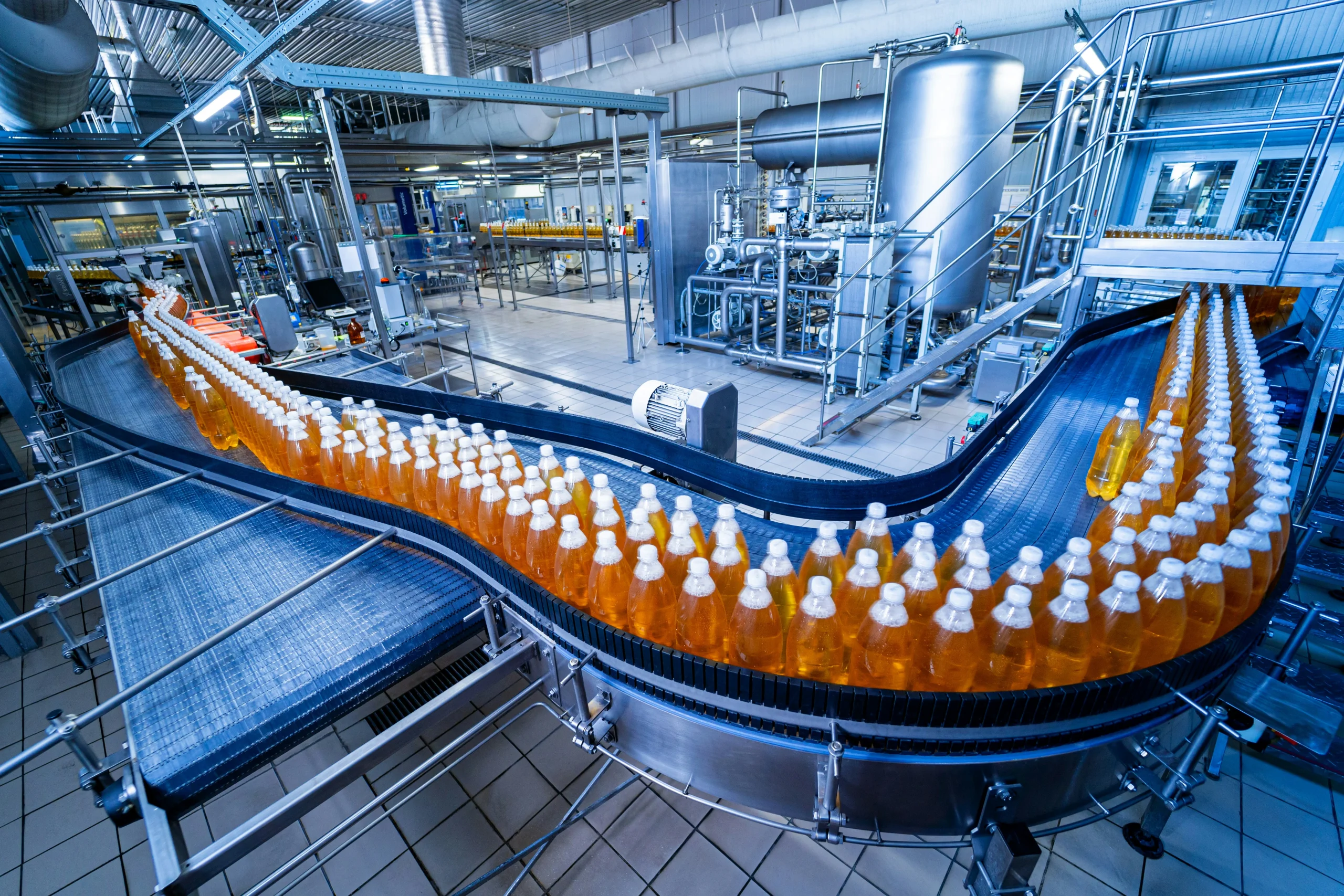
ATEX Assessment providers for your industry
Move From Hazard to Harmony In A Few Simple Steps
Talk to us
Site assessment
Your report
Ongoing support
Defend your compliance position.
Operate with confidence.
Protect your people.
Achieve rigorous, regulation-ready ATEX compliance with Sigma-HSE.
Resources to support your ATEX journey: ATEX Equipment Selection, ATEX Equipment, Explosive Atmospheres and Over-zoning, On-Demand: Avoid Hazardous Area Over-Zoning (ATEX/DSEAR Essentials), On-demand: DSEAR & ATEX Update
Frequently asked questions
What is ATEX compliance, and does it apply to my business?
ATEX refers to two European Directives: Directive 2014/34/EU, which applies to manufacturers of equipment intended for use in explosive atmospheres, and Directive 1999/92/EC, which sets out employer responsibilities for managing explosion risks in the workplace.
In the UK, the employer duty is implemented through the Dangerous Substances and Explosive Atmospheres Regulations 2002 (DSEAR).
If your site handles flammable gases, vapours, mists, or combustible dusts, or if you operate in sectors such as chemical, oil & gas, pharmaceutical, or food processing, ATEX and DSEAR are almost certainly applicable to your operations.
What is a Hazardous Area Classification (HAC), and why does it matter?
A Hazardous Area Classification identifies every area of your site where an explosive atmosphere may occur, and assigns it a zone based on how likely that atmosphere is to form and how long it persists.
These zones directly determine which category of ATEX-rated equipment your site requires in each area. Correct zoning is critical: under-zoning creates an unacceptable explosion risk; over-zoning drives unnecessary capital expenditure on higher-category equipment.
HAC is a legal requirement under DSEAR Regulation 7 and forms the foundation of any credible ATEX compliance position.
What is the difference between ATEX and DSEAR?
ATEX is the European legislative framework setting out requirements for equipment used in explosive atmospheres and for employer management of those atmospheres.
DSEAR is the UK implementation of the employer-facing ATEX directive.
For most UK operations, compliance with DSEAR is the direct legal requirement, but the underlying technical standards and zone classifications are consistent with the wider ATEX framework.
Sigma-HSE assessments can address both ATEX and DSEAR requirements simultaneously.
How often should an ATEX or DSEAR assessment be reviewed?
The HSE recommends DSEAR assessments are revisited every 3 to 5 years as a minimum, with higher-risk sites requiring review every 1 to 2 years.
You should always review when process modifications or new substances are introduced to site, equipment or control systems change, near-miss incidents occur, regulatory guidance changes, or ahead of audits and insurance requirements.
What is a NEIRA and when do I need one?
A Non-Electrical Equipment Ignition Risk Assessment (NEIRA) systematically evaluates mechanical equipment such as pumps, conveyors, mixers, or agitators for potential ignition sources including frictional heat and mechanical sparks.
If you have pre-ATEX-certification mechanical equipment operating in classified zones, a NEIRA can provide the equivalent assurance of ATEX certification, and is often significantly more cost-effective than equipment replacement.
How much does an ATEX compliance assessment cost?
The cost depends on your site’s complexity, the number of processes and zones involved, whether a new HAC is required or an existing one is being reviewed, and your location.
We always provide bespoke, transparent quotes with no hidden fees. Get in touch and we’ll issue yours within a few days.
Can Sigma-HSE integrate ATEX compliance with our broader process safety programme?
Yes, and we recommend it. We regularly align ATEX and DSEAR assessments with HAZOP studies, HAZID analyses, COMAH Safety Reports, and Process Safety Management.
Our cross-disciplinary approach reduces duplication, streamlines documentation, and strengthens your overall regulatory position.
How long does an ATEX assessment take?
For a single-site assessment, our engineers typically complete the site inspection within one to two days, with the peer-reviewed report issued within two to three weeks. Multi-site programmes are scoped individually. Get in touch and we will give you a realistic timeline for your site before you commit.
What is the difference between ATEX, DSEAR and UKCA. Which apply to my site?
In the UK, your primary legal obligation is compliance with the Dangerous Substances and Explosive Atmospheres Regulations 2002 (DSEAR), enforced by the HSE.
DSEAR implements the employer-facing ATEX directive and sets out requirements for hazardous area classification, equipment selection, and risk assessment under Regulation 7.
Equipment placed on the UK market after January 2021 may carry UKCA marking rather than CE or ATEX marking.
Sigma-HSE assessments address equipment conformity under both frameworks simultaneously, so whether your site operates under UK or EU jurisdiction, your compliance position is covered.
You can read more here.